Who it is for
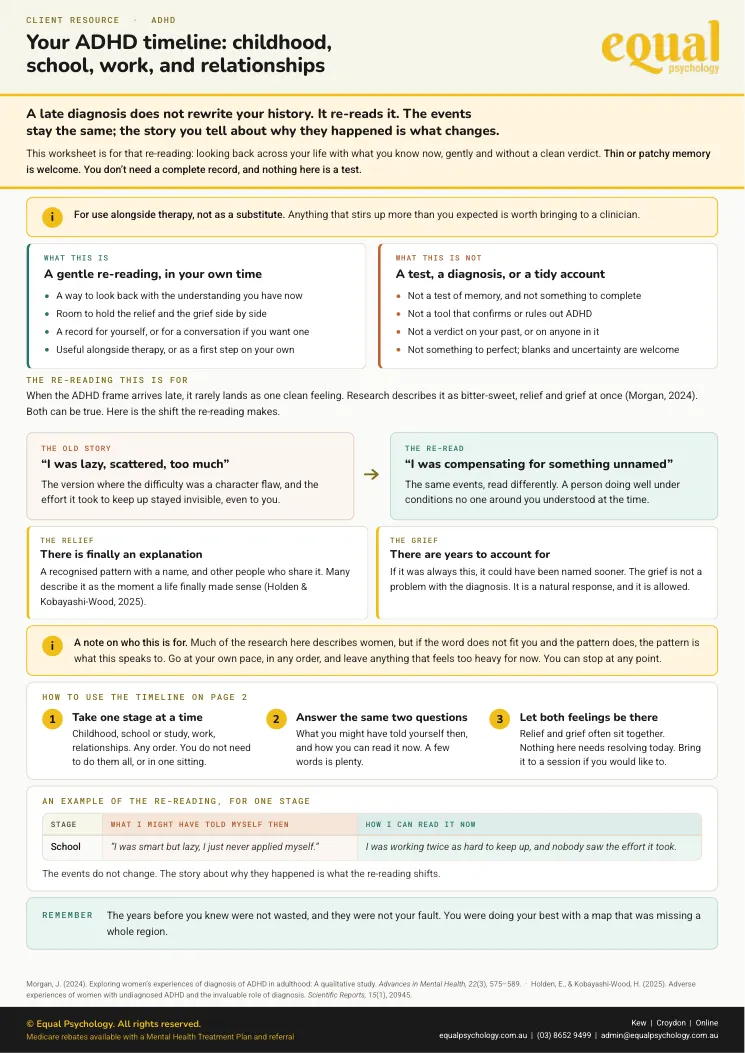
For adults who came to the ADHD frame later in life and are looking back with what they know now. It rarely lands as one clean feeling. Relief and grief often arrive together, and both are allowed. Much of the research here describes women, but if the word does not fit you and the pattern does, the pattern is what this speaks to.
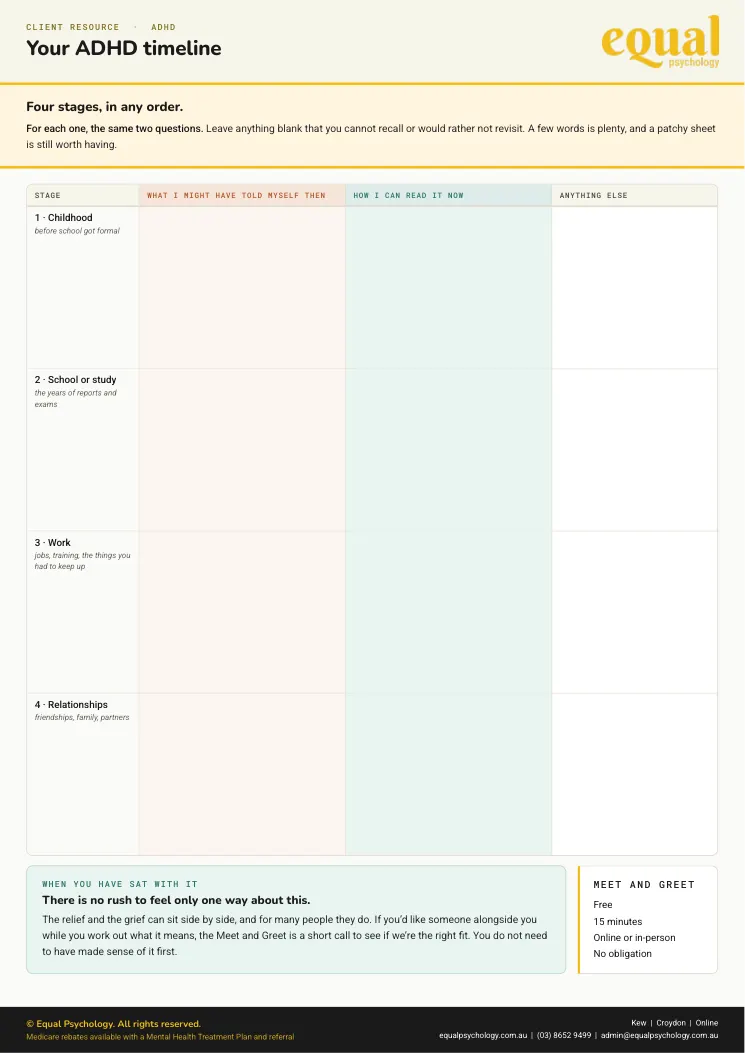
The timeline gives you a place to set the old story next to a re-reading, one stage of life at a time. It is a record for yourself, or for a conversation with your clinician if you want one. Thin or patchy memory is welcome.
What is inside
Page 1, read first. What the sheet is and is not, an example re-reading for one stage, and the shift the re-reading makes:
Page 2. Four stages, in any order: childhood, school or study, work, and relationships. For each one, the same two questions, what I might have told myself then and how I can read it now, plus a box for anything else.
How to use it
- 1Take one stage at a timeChildhood, school or study, work, relationships. Any order. You do not need to do them all, or in one sitting.
- 2Answer the same two questionsWhat you might have told yourself then, and how you can read it now. A few words is plenty.
- 3Let both feelings be thereRelief and grief often sit together. Nothing here needs resolving today. Bring it to a session if you would like to.
The years before you knew were not wasted, and they were not your fault. Leave blank anything you cannot recall or would rather not revisit; a patchy sheet is still worth having. You can type into the PDF on a computer, or print it and write by hand.