Who it is for
For anyone weighing up whether, when or how to tell their workplace about a chronic illness, or thinking through what to say after a conversation that has already happened. There is no universal right answer to disclosure. It depends on you, your workplace, your role and what you actually need.
The planner gives you a place to work out who to tell, what to ask for and what stays private, before you walk in. It is a planning sheet, not a script, and there is no obligation to use anything you write. If you are seeing a clinician, it gives you both something concrete to talk through.
What is inside
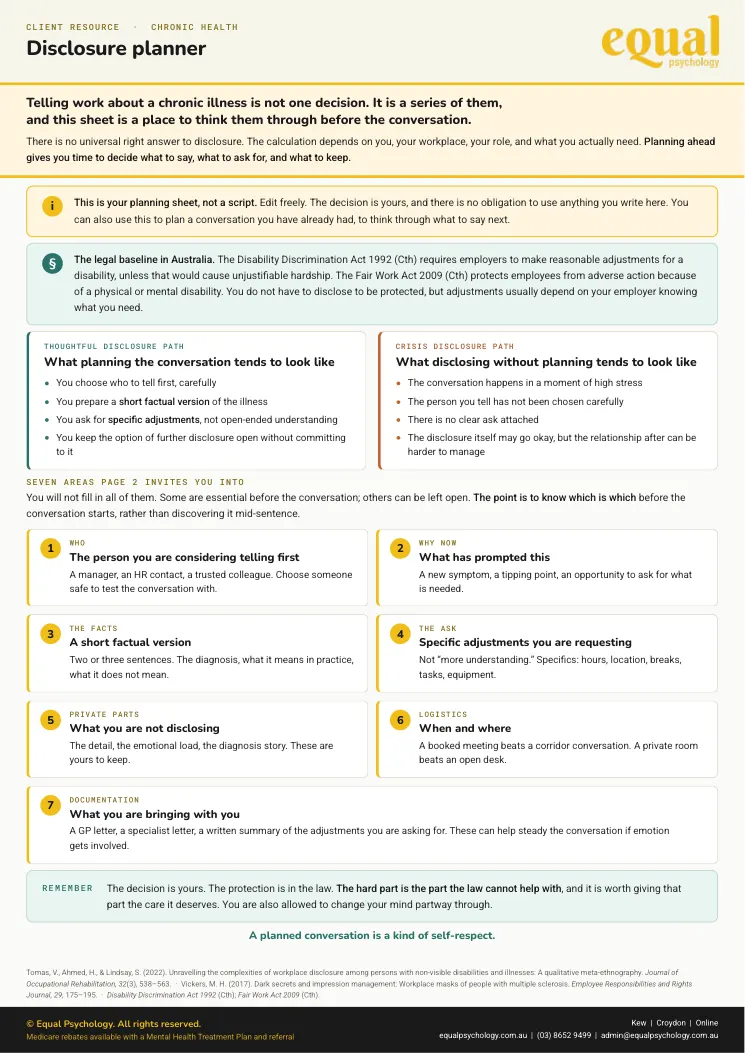
Page 1, read first. Why disclosure is a series of decisions, a short note on the legal baseline in Australia, and two paths the page compares:
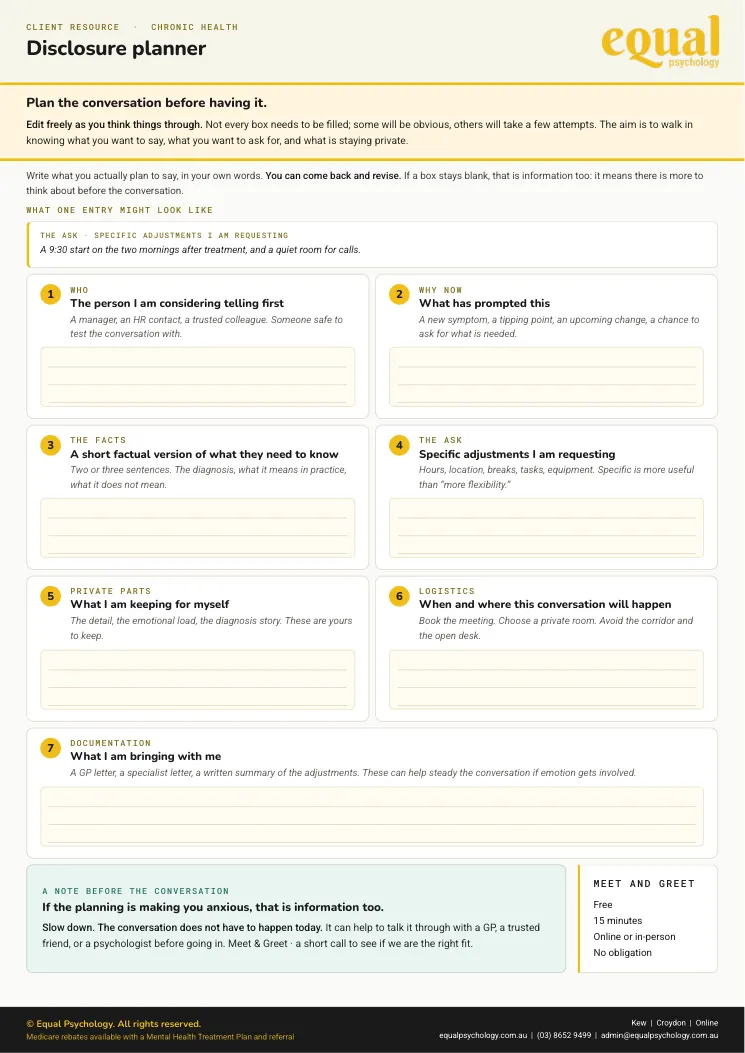
Page 2. Seven areas to plan: who, why now, the facts, the ask, private parts, logistics and documentation. Each has a prompt, and not every box needs to be filled.
How to use it
- 1Start with who and whyName the person you are considering telling first, someone safe to test the conversation with, and what has prompted this now.
- 2Write the facts and the askKeep the facts to two or three sentences. Make the ask specific: hours, location, breaks, tasks, equipment.
- 3Decide what stays privateNote what you are keeping for yourself, then plan when, where and what documentation you will bring. A blank box means there is more to think about.
Write what you actually plan to say, in your own words, and come back to revise it as often as you need. You are allowed to change your mind partway through. You can type into the PDF on a computer, or print it and write by hand.