Who it is for
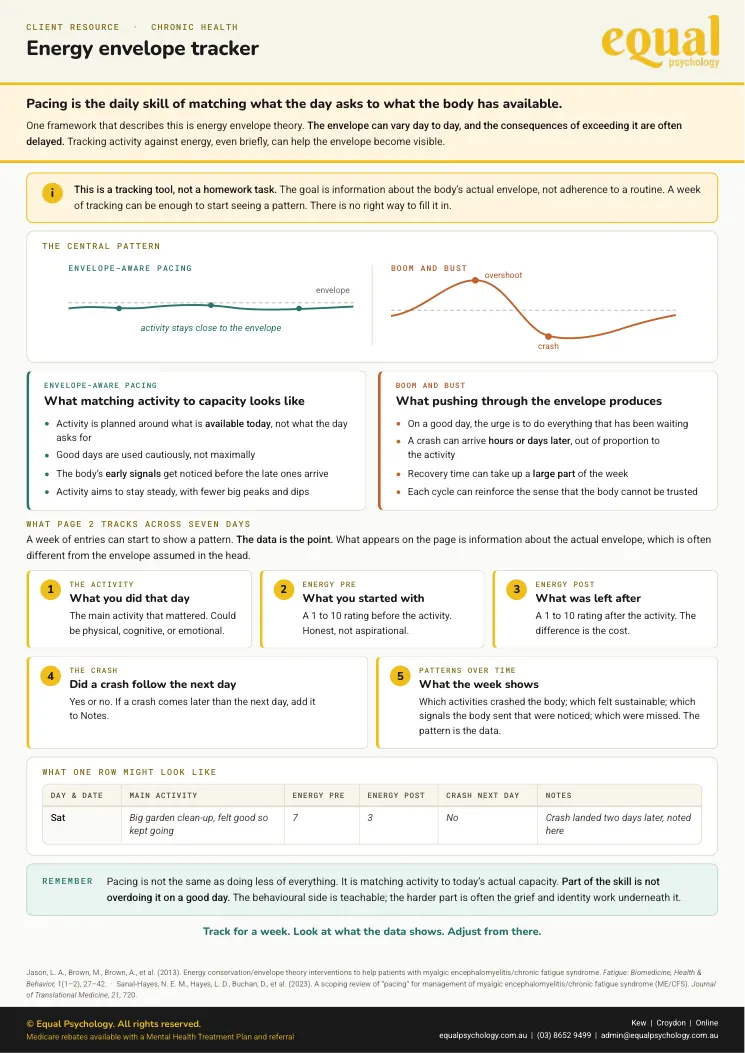
For anyone living with a chronic health condition whose energy changes from day to day, and who has noticed that the cost of a big day often arrives later. On a good day, the urge to do everything that has been waiting makes sense. The trouble is that the crash can arrive hours or days afterwards.
The tracker turns a week of days into information about the envelope you actually have, which is often different from the one assumed in your head. You and your clinician then have real data to look at together. It is a record, not a routine to stick to.
What is inside
Page 1, read first. What energy envelope theory describes, why the consequences of exceeding the envelope are often delayed, and the two patterns the page compares:
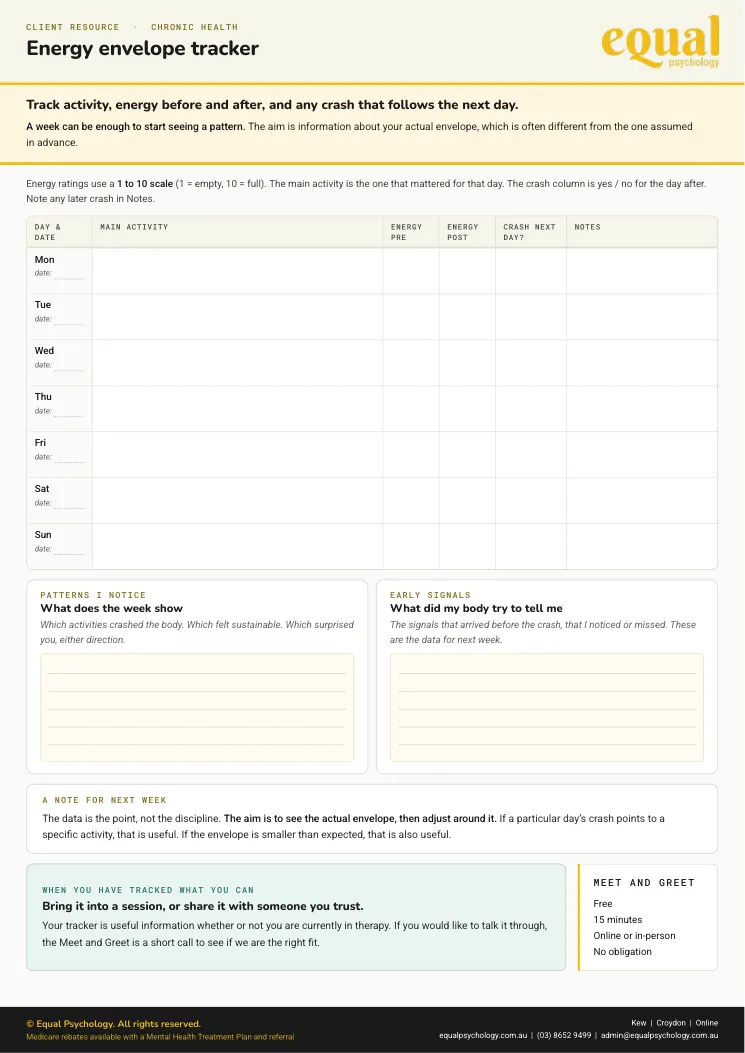
Page 2. Seven rows, Monday to Sunday: main activity, energy pre, energy post, crash next day, and notes. Two boxes at the end ask what patterns you notice and what early signals your body sent.
How to use it
- 1Track one activity a dayWrite the main activity that mattered that day. It could be physical, cognitive or emotional.
- 2Rate before and afterGive your energy a 1 to 10 rating before and after the activity, honest rather than aspirational. Mark yes or no if a crash followed the next day, and add any later crash to the notes.
- 3Look at the weekAt the end of the week, note which activities crashed the body, which felt sustainable, and which signals you noticed or missed. Bring it into a session, or share it with someone you trust.
The data is the point, not the discipline. If the envelope turns out smaller than expected, that is useful information too. There is no right way to fill it in. You can type into the PDF on a computer, or print it and write by hand.