Who it is for
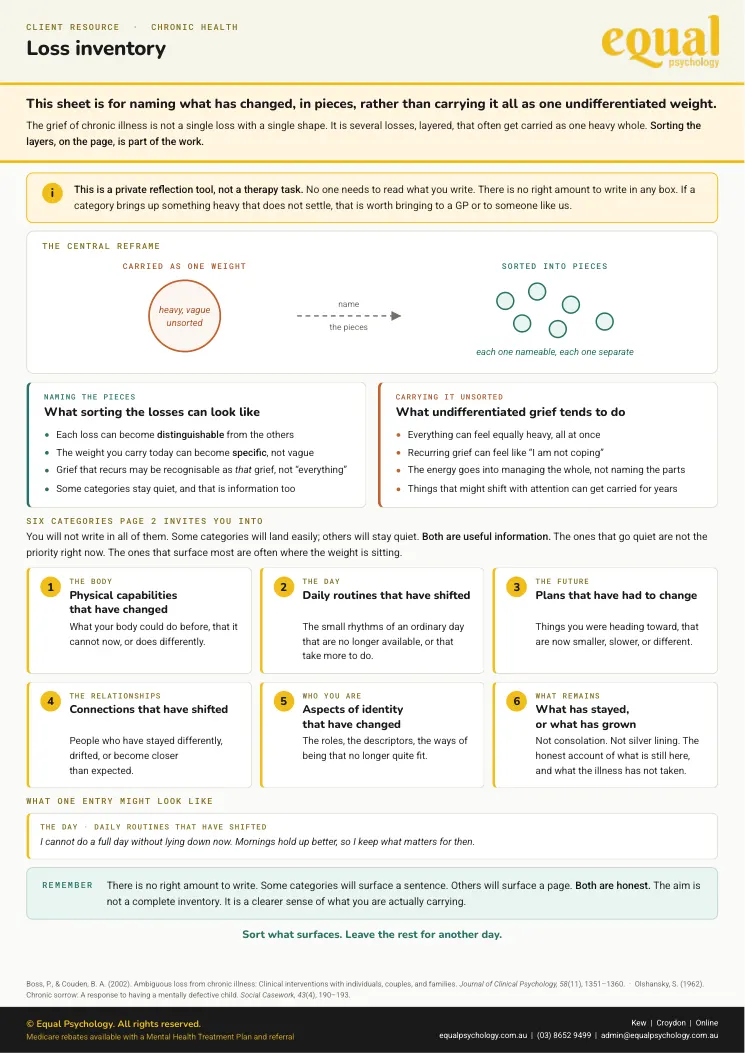
For anyone living with a chronic illness who feels the weight of what has changed, without always being able to say what it is. Grief like this tends to recur, and when it is unsorted, everything can feel equally heavy at once. That is not a sign of failing to cope.
The inventory gives each loss its own place on the page, along with an honest account of what remains. It is a private reflection tool: no one needs to read it. If you choose to bring it to a session, it gives you and your clinician a clearer picture of what you are carrying.
What is inside
Page 1, read first. Why the grief of chronic illness is several losses rather than one, what sorting them can look like, and the two states the page contrasts:
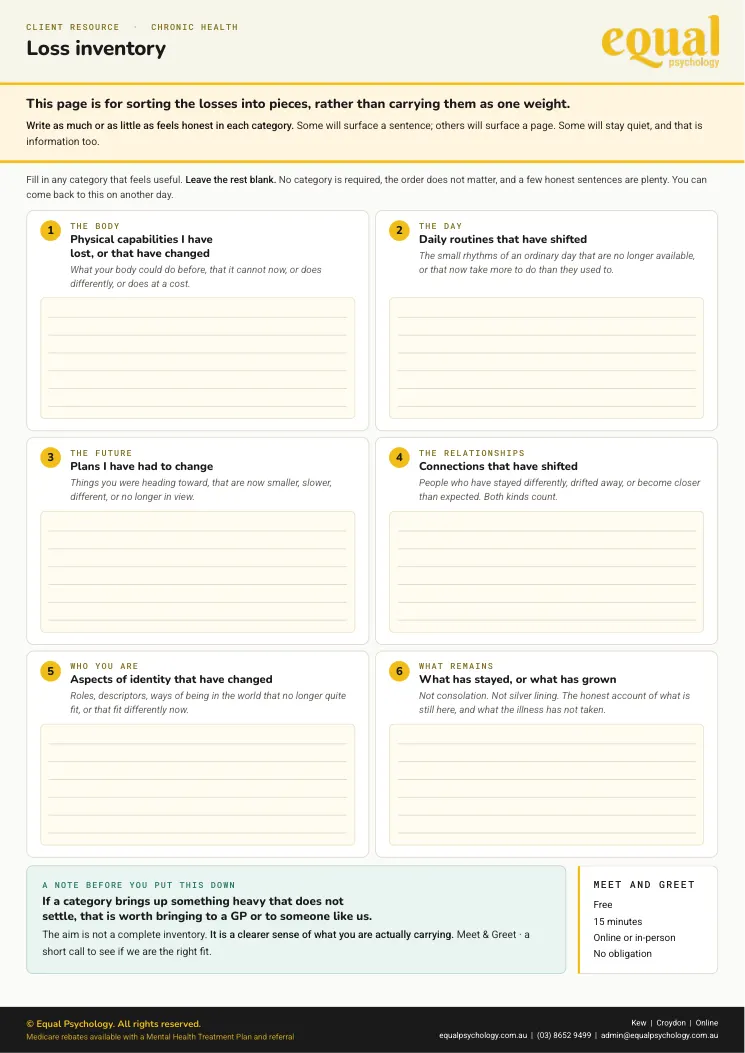
Page 2. Six categories, each with a prompt: the body, the day, the future, the relationships, who you are, and what remains.
How to use it
- 1Fill in what feels usefulNo category is required and the order does not matter. Leave the rest blank.
- 2Write as much as is honestSome categories will surface a sentence, others a page. A few honest sentences are plenty.
- 3Notice what stays quietCategories that stay quiet are information too. The ones that surface most are often where the weight is sitting. You can come back on another day.
The aim is not a complete inventory. It is a clearer sense of what you are actually carrying. Sort what surfaces, and leave the rest for another day. You can type into the PDF on a computer, or print it and write by hand.