Body sensations and mood can affect each other. This diary maps that relationship without judging it, and without suggesting your symptoms are imagined.
For anyone living with a chronic health condition who has noticed that a sensation in the body can set off worry, and that worry can make the body feel louder. Both the sensations and the anxiety are real. Checking, searching and seeking reassurance can feel necessary when the two are tangled together.
The diary records sensation, thought, mood and what followed, so the pattern between them can become visible over a week. That gives you and your clinician something specific to look at. It does not ask you to disbelieve your body.
For use alongside therapy, not as a substitute. This diary records the link between sensation, thought and mood; it does not diagnose the underlying condition. If the sensations themselves warrant medical attention, the diary does not replace that, and you can take it to your GP if it helps the conversation.
What is inside
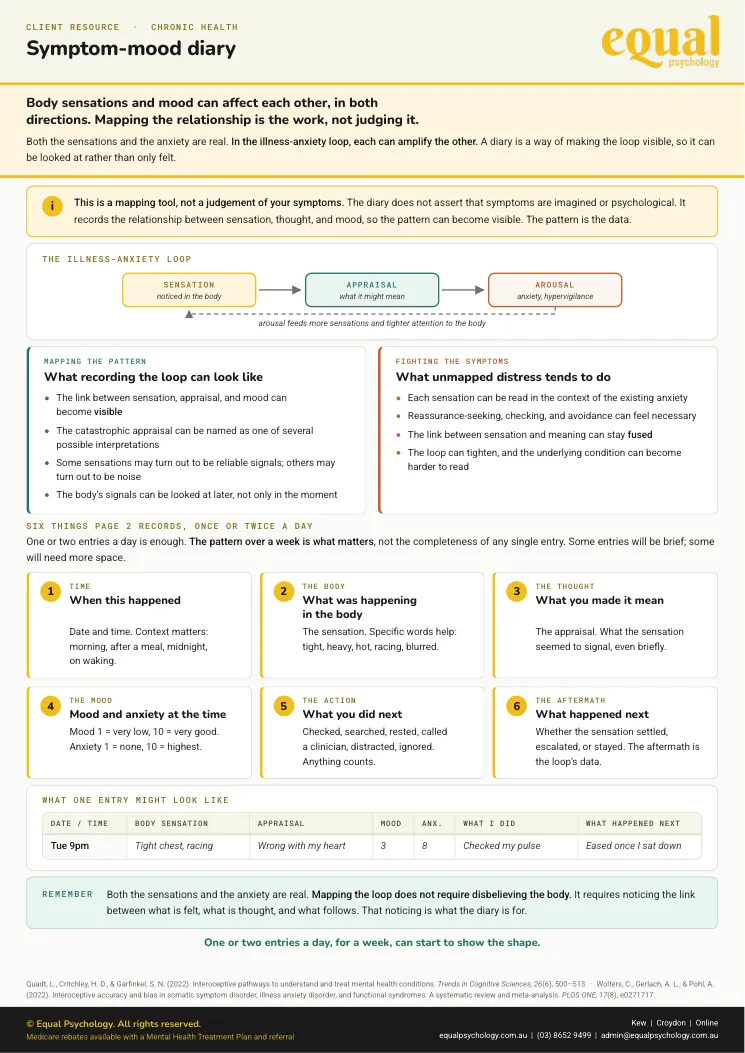
Page 1, read first.What the illness-anxiety loop is, the difference between mapping the pattern and fighting the symptoms, and the three parts of the loop:
Sensation
Noticed in the body
Appraisal
What it might mean
Arousal
Anxiety, hypervigilance
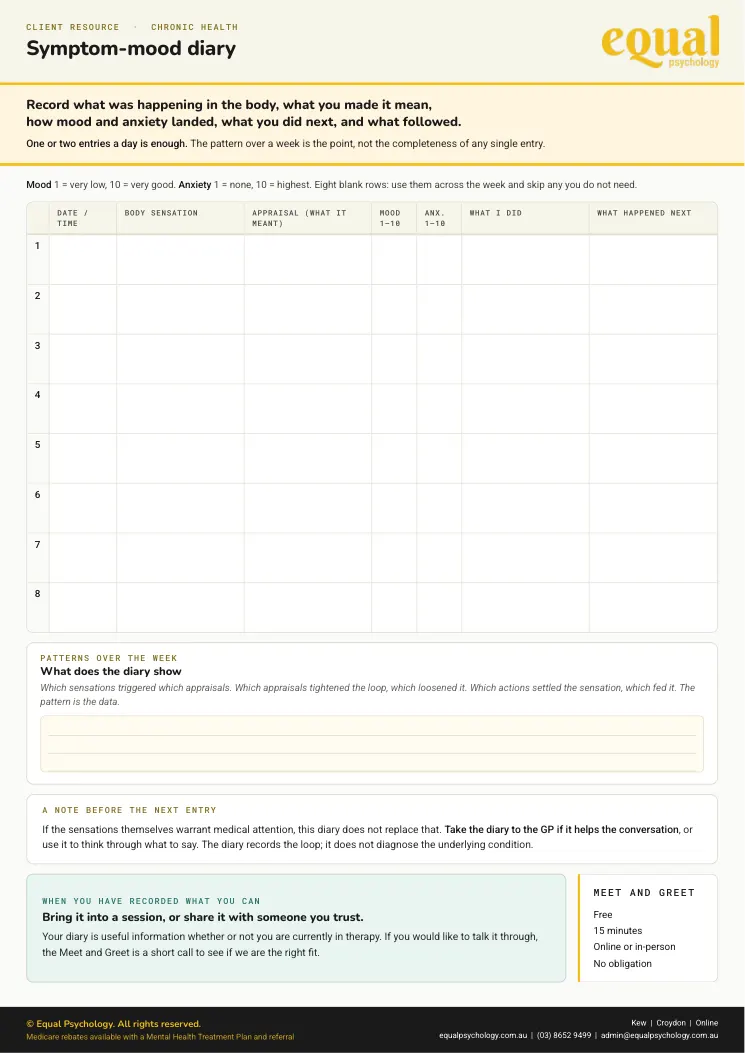
Page 2.Eight rows for the week: date / time, body sensation, appraisal (what it meant), mood, anxiety, what I did, and what happened next. A box at the end asks what the week shows.
Page 1 · Read firstPage 2 · To fill in
How to use it
1Record the sensationNote the date, time and context, then describe the sensation in specific words: tight, heavy, hot, racing, blurred.
2Add the meaning and the moodWrite what the sensation seemed to signal, even briefly, then rate mood from 1 (very low) to 10 (very good) and anxiety from 1 (none) to 10 (highest).
3Note what came nextWrite what you did and whether the sensation settled, escalated or stayed. One or two entries a day is enough.
The pattern over a week is the point, not the completeness of any single entry. Skip rows you do not need. Bring it into a session, or share it with someone you trust. You can type into the PDF on a computer, or print it and write by hand.
One email a month from Equal Psychology with our newest posts, guides and worksheets.
References
Quadt, L., Critchley, H. D., & Garfinkel, S. N. (2022). Interoceptive pathways to understand and treat mental health conditions. Trends in Cognitive Sciences, 26(6), 500–513.
Wolters, C., Gerlach, A. L., & Pohl, A. (2022). Interoceptive accuracy and bias in somatic symptom disorder, illness anxiety disorder, and functional syndromes: A systematic review and meta-analysis. PLOS ONE, 17(8), e0271717.
General information only. This worksheet is general psychoeducation, not a clinical assessment, diagnosis, or treatment. Reading it does not establish a treating relationship. If you would like personalised support, please book a Meet and Greet or speak with your GP. If you are in immediate danger, call 000, or call Lifeline on 13 11 14.