For anyone who has been waiting to feel like doing things, and finding that the feeling does not arrive. Low mood can make things that once felt good feel flat for now. That is not a failing: most of what you already do each day happens on autopilot, without waiting for motivation first.
The log gives you a simple record of a week: what you did, how it landed, and what you noticed. It gives you and your clinician something concrete to look at together. It does not ask you to enjoy anything.
For use alongside therapy, not as a substitute. This log is for recording small things you did and how they landed, not for judging how well you are doing. Working out what is worth re-engaging with is a conversation to have with a clinician.
What is inside
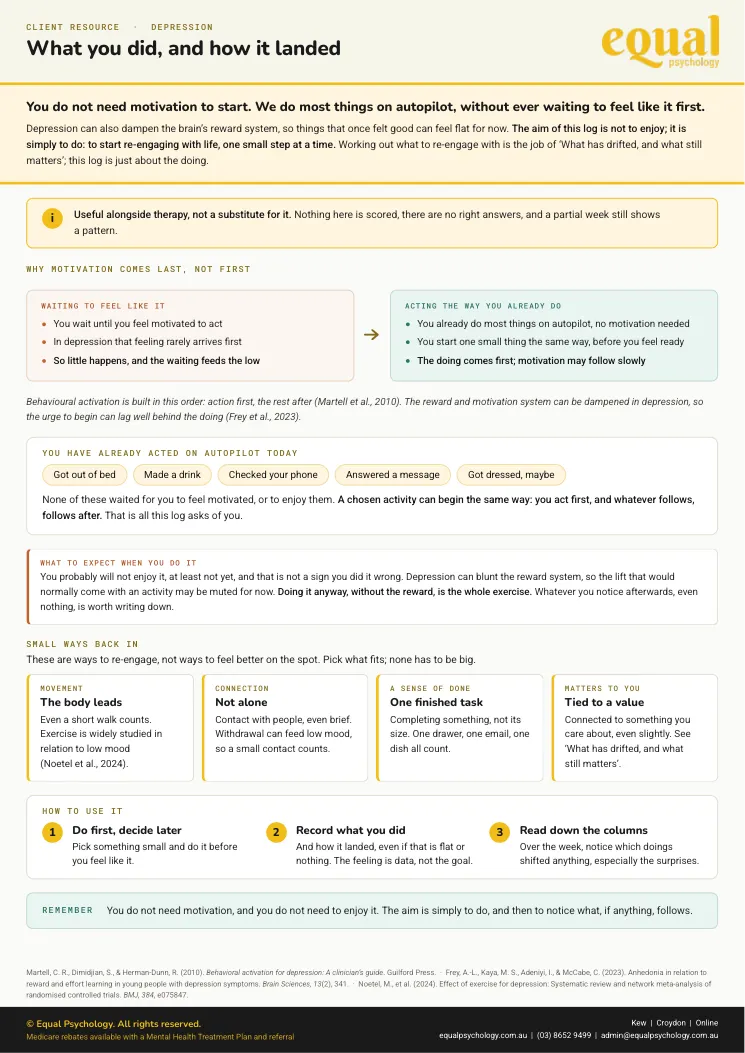
Page 1, read first.Why motivation tends to come last rather than first, what to expect when you do something, and four small ways back in:
Movement
The body leads
Connection
Not alone
A sense of done
One finished task
Matters to you
Tied to a value
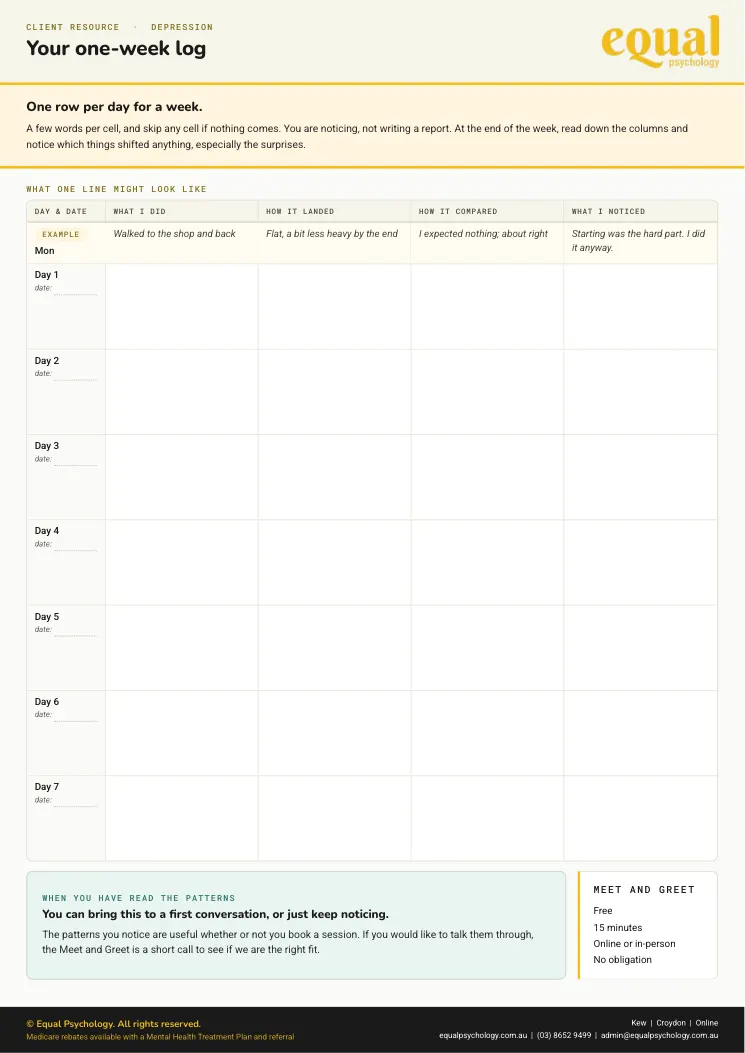
Page 2.A one-week log, one row per day: day and date, what I did, how it landed, how it compared, and what I noticed. A few words per cell is enough.
Page 1 · Read firstPage 2 · To fill in
How to use it
1Do first, decide laterPick something small and do it before you feel like it. It does not have to be big.
2Record what you didWrite what you did and how it felt, even if that was flat or nothing. The feeling is information, not the goal.
3Read down the columnsAt the end of the week, notice which things shifted anything, especially the surprises. Bring what you notice to a session.
Nothing here is scored, there are no right answers, and a partial week still shows a pattern. Skip any cell if nothing comes. You can type into the PDF on a computer, or print it and write by hand.
One email a month from Equal Psychology with our newest posts, guides and worksheets.
References
Martell, C. R., Dimidjian, S., & Herman-Dunn, R. (2010). Behavioral activation for depression: A clinician's guide. Guilford Press.
Frey, A.-L., Kaya, M. S., Adeniyi, I., & McCabe, C. (2023). Anhedonia in relation to reward and effort learning in young people with depression symptoms. Brain Sciences, 13(2), 341.
Noetel, M., et al. (2024). Effect of exercise for depression: Systematic review and network meta-analysis of randomised controlled trials. BMJ, 384, e075847.
General information only. This worksheet is general psychoeducation, not a clinical assessment, diagnosis, or treatment. Reading it does not establish a treating relationship. If you would like personalised support, please book a Meet and Greet or speak with your GP. If you are in immediate danger, call 000, or call Lifeline on 13 11 14.