Who it is for
For anyone who has focused on the night when sleep is hard, and wondered whether the day is playing a part. Much of what affects how the night goes happens before the sun sets: light, movement, recovery, and the substances we use to shape attention.
The audit gives you one typical week of your day on a page, set beside how each night went, so you and your clinician can see which daytime patterns sit alongside the harder nights. It does not ask you to change anything while you fill it in.
What is inside
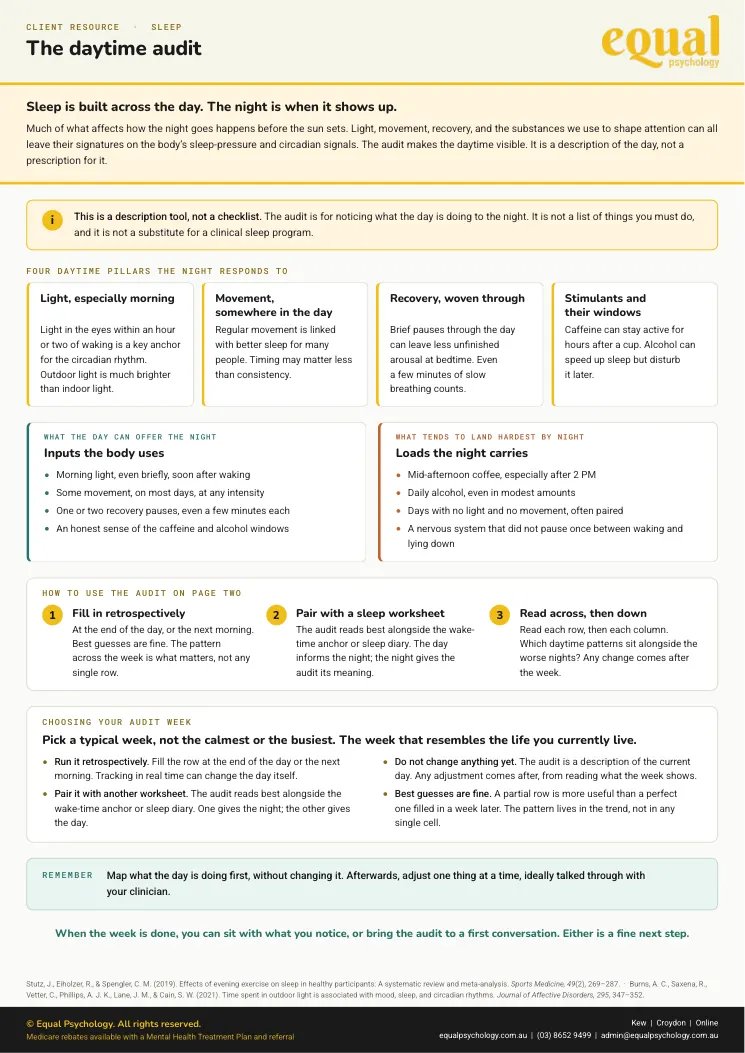
Page 1, read first. What the day can offer the night, what tends to land hardest by night, how to choose your audit week, and four daytime pillars the night responds to:
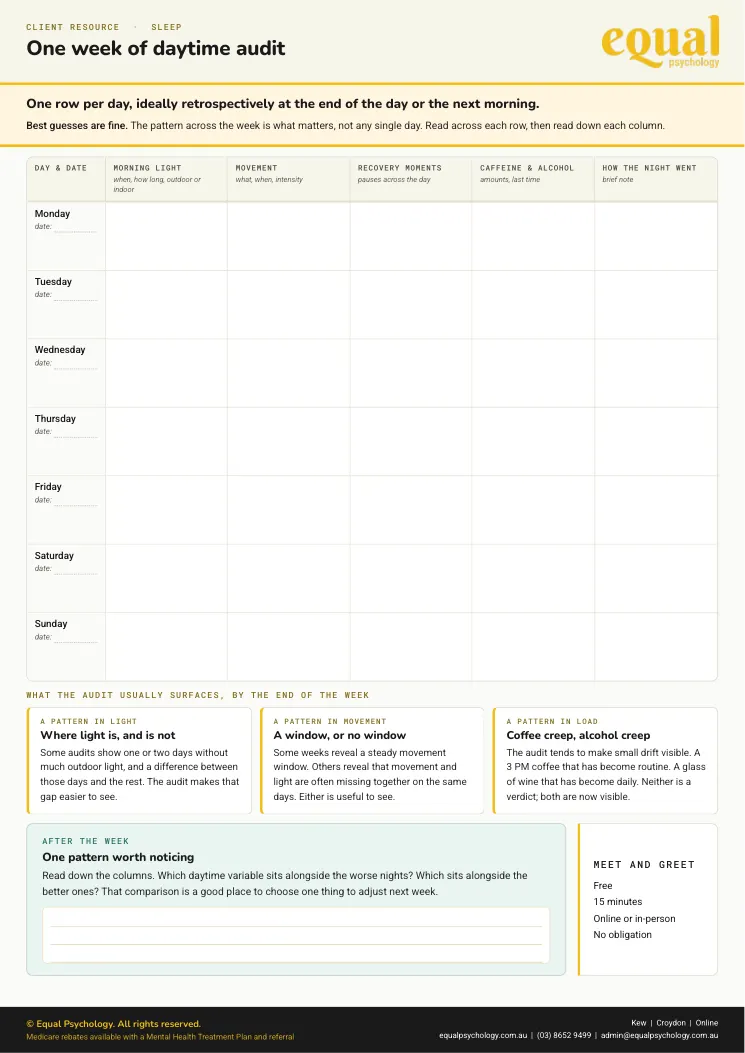
Page 2. One week of daytime audit, one row per day: morning light, movement, recovery moments, caffeine and alcohol, and how the night went.
How to use it
- 1Pick a typical weekNot the calmest or the busiest. The week that resembles the life you currently live.
- 2Fill in retrospectivelyAt the end of the day, or the next morning. Best guesses are fine. A partial row is more useful than a perfect one filled in a week later.
- 3Pair it with a sleep worksheetThe audit reads best alongside the wake-time anchor or sleep diary. One gives the night; the other gives the day.
The pattern across the week is what matters, not any single row. When the week is done, you can sit with what you notice, or bring the audit to a first conversation. You can type into the PDF on a computer, or print it and write by hand.