Who it is for
For anyone whose bedtimes and wake times have drifted, or who finds that weekend sleep-ins make Sunday night hard. When sleep has been unsettled, it is natural to chase missed sleep. This worksheet asks you to hold one thing steady instead: the time you get out of bed.
It gives you fourteen days of steady wake time, with light and movement soon after, and an honest record of what shifts. The aim is not perfection, and the record is something you can bring to a conversation with your clinician.
What is inside
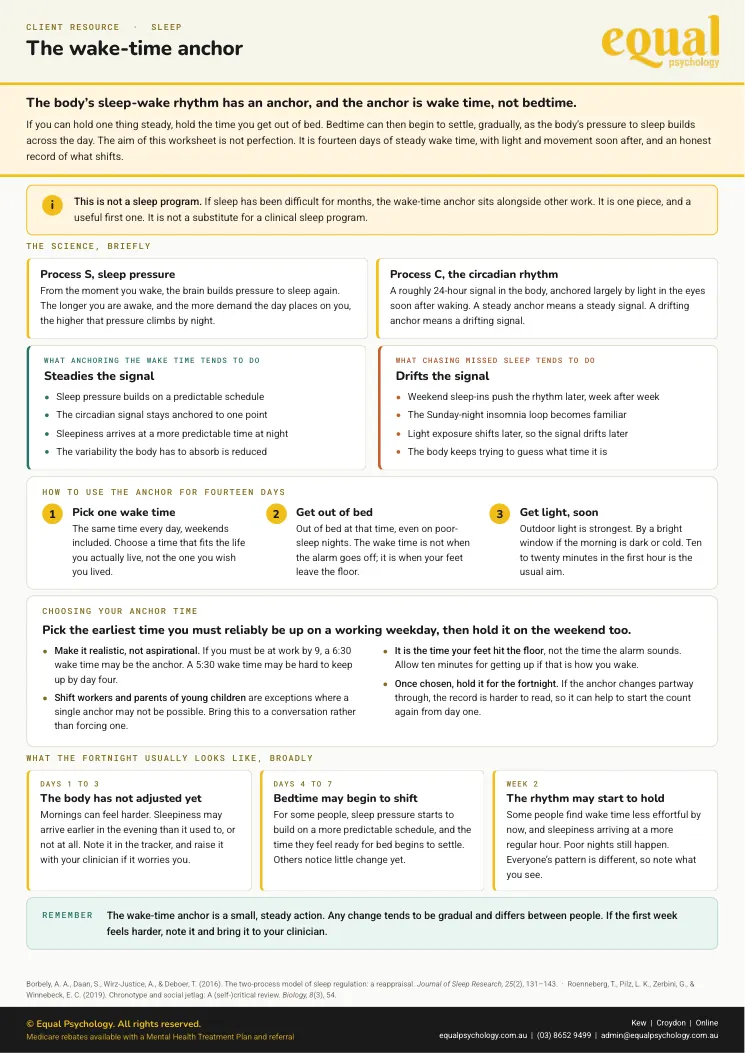
Page 1, read first. The science briefly, what anchoring the wake time tends to do compared with chasing missed sleep, how to choose your anchor time, and what the fortnight broadly looks like. Two processes sit underneath it:
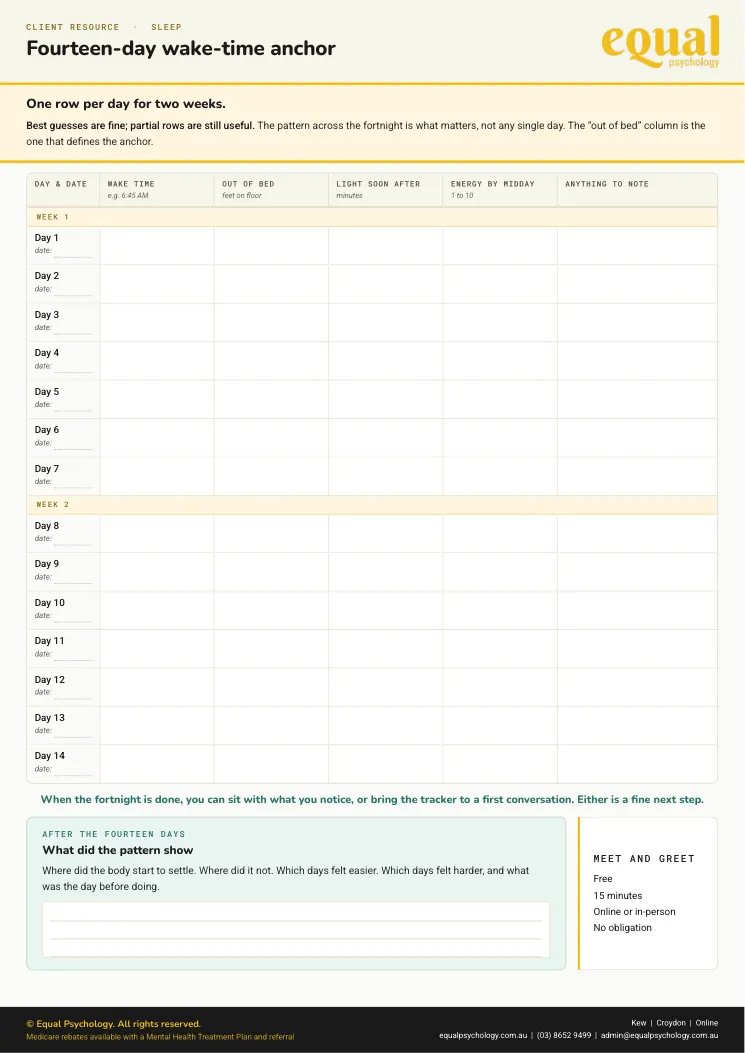
Page 2. A fourteen-day tracker with one row per day: wake time, out of bed, light soon after, energy by midday on a scale of 1 to 10, and anything to note. The out of bed column is the one that defines the anchor.
How to use it
- 1Pick one wake timeThe same time every day, weekends included. Choose a time that fits the life you actually live, not the one you wish you lived.
- 2Get out of bedOut of bed at that time, even on poor-sleep nights. The wake time is when your feet leave the floor, not when the alarm goes off.
- 3Get light, soonOutdoor light is strongest. By a bright window if the morning is dark or cold. Ten to twenty minutes in the first hour is the usual aim.
Best guesses are fine, and partial rows are still useful. The pattern across the fortnight is what matters, not any single day. When it is done, you can sit with what you notice, or bring the tracker to a first conversation. You can type into the PDF on a computer, or print it and write by hand.