For anyone about to see a psychologist about low mood, especially if you are unsure why you feel this way, have little energy to talk, or almost did not come. Those are common, and they are part of what you are coming about, not a problem in the room.
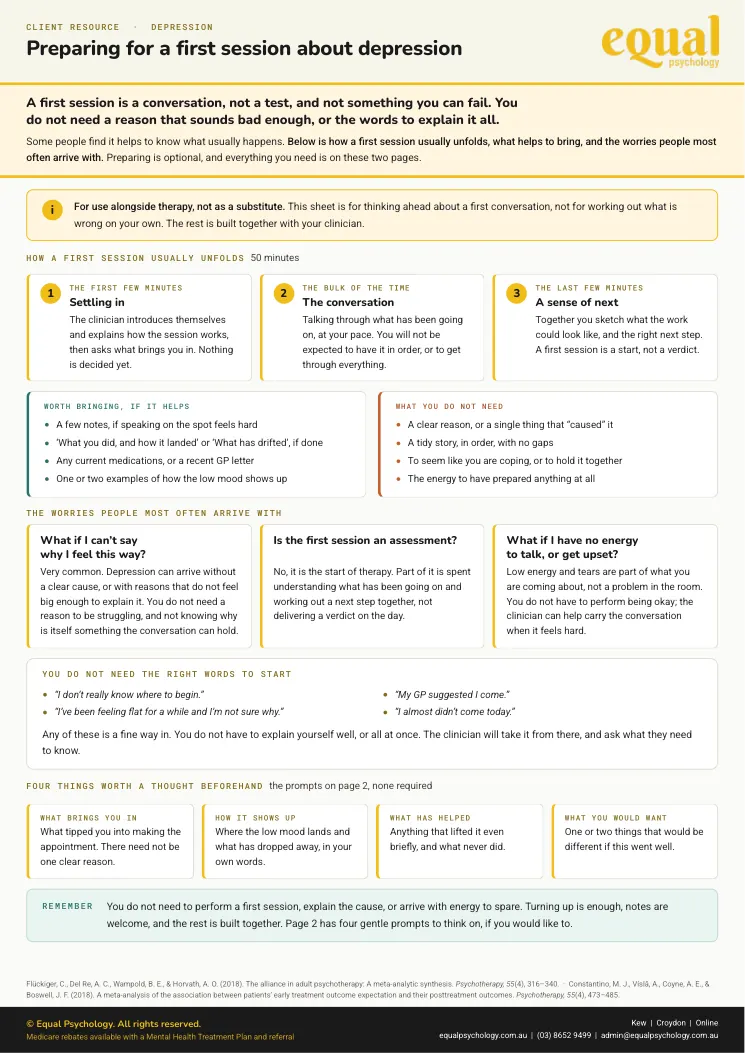
The sheet sets out how a first session usually unfolds, what may be worth bringing, and four optional prompts to think on beforehand. Preparing is optional: turning up is enough, and notes you can read aloud are welcome.
For use alongside therapy, not as a substitute. This sheet is for thinking ahead about a first conversation, not for working out what is wrong on your own. The rest is built together with your clinician.
What is inside
Page 1, read first.How a first session of 50 minutes usually unfolds, what is worth bringing and what you do not need, the worries people most often arrive with, and some ways to start when you do not have the words. The session moves through three parts:
Settling in
The first few minutes
The conversation
The bulk of the time
A sense of next
The last few minutes
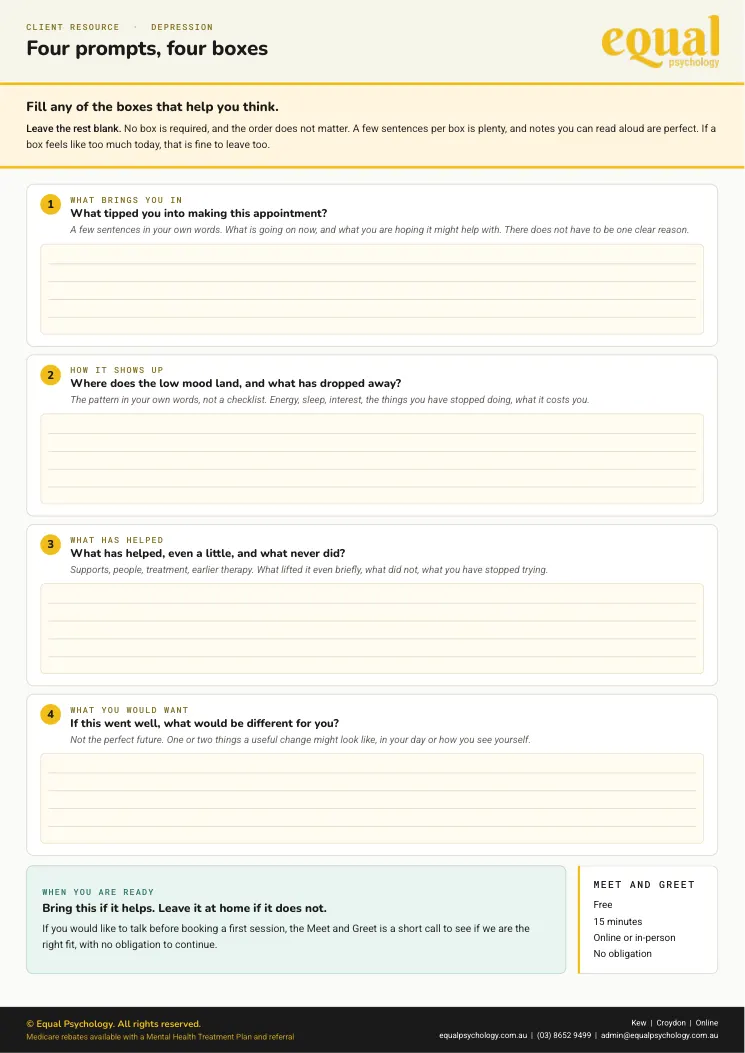
Page 2.Four boxes with a prompt each: what brings you in, how it shows up, what has helped, and what you would want. Fill any that help you think and leave the rest blank.
Page 1 · Read firstPage 2 · To fill in
How to use it
1Pick any boxNo box is required, and the order does not matter. If a box feels like too much today, leave it.
2Keep it shortA few sentences per box is plenty. Notes you can read aloud are perfect.
3Bring it if it helpsTake it to your first session, or leave it at home if it does not help.
You do not need to perform a first session, explain the cause, or arrive with energy to spare. You can type into the PDF on a computer, or print it and write by hand.
One email a month from Equal Psychology with our newest posts, guides and worksheets.
References
Flückiger, C., Del Re, A. C., Wampold, B. E., & Horvath, A. O. (2018). The alliance in adult psychotherapy: A meta-analytic synthesis. Psychotherapy, 55(4), 316–340.
Constantino, M. J., Víslă, A., Coyne, A. E., & Boswell, J. F. (2018). A meta-analysis of the association between patients' early treatment outcome expectation and their posttreatment outcomes. Psychotherapy, 55(4), 473–485.
General information only. This worksheet is general psychoeducation, not a clinical assessment, diagnosis, or treatment. Reading it does not establish a treating relationship. If you would like personalised support, please book a Meet and Greet or speak with your GP. If you are in immediate danger, call 000, or call Lifeline on 13 11 14.