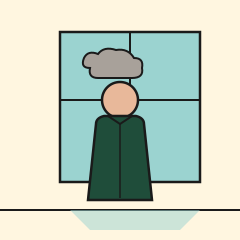
The most useful place to start is also the hardest: you cannot fix this for them, and you were never meant to. Depression is not something a person can be loved out of, and if someone you care about is still struggling, that is not a measure of how much you have given. You do not have to be their therapist, find the right words, or have a plan. What helps is quieter than any of that. It is staying close, listening without rushing to mend things, and gently helping them toward support that is built for this. And because caring for someone through depression is genuinely hard, looking after yourself is part of the work, not a distraction from it.
Start by letting go of the idea that you can fix it
Many people come to this carrying a quiet sense that if they just said the right thing, or tried hard enough, they could lift their person out of it. It is a loving instinct, and it is also a heavy and impossible brief to give yourself. Depression does not lift on command, and it is not a problem you can solve from the outside with enough effort or cheerfulness.
Letting go of fixing is not giving up. It is putting your energy where it can actually land. You are not there to be their clinician, and you do not need to work out what is wrong with them or whether it "counts" as depression. That is what a GP or a psychologist is for, and pointing them gently in that direction is far more useful than trying to diagnose it yourself. Your role is the one no professional can fill: the person who stays.
What tends to help
When people describe what actually helped from someone close to them, it is rarely advice. It is presence. Sitting with them without needing the mood to change. Listening to how it is without immediately trying to argue them out of it. Texting even when the replies are short or slow, so they know the door is still open. Small practical things, a meal dropped over, a lift to an appointment, the washing-up done without being asked, often say more than a speech ever could.
Patience matters here too. Depression can flatten someone's energy and pull them away from the people they love, and that withdrawal is part of the condition, not a verdict on you. Staying steady through it, without taking the distance personally, is one of the most genuinely helpful things a person can offer.
What tends to land badly
Just as telling is what people say helped least. Being told to cheer up, to think positive, or that others have it worse tends to leave someone feeling more alone, not less. Responses that feel dismissive, judgemental, or that minimise the distress, however well meant, can have the same effect: when people feel that the response to their pain lacks understanding, they often close off and stop sharing, which is the opposite of what you are hoping for (Samari et al., 2022).
None of this means you have to be perfect, or weigh every word. It means that warmth and curiosity tend to open a person up, while pressure and quick fixes tend to shut them down. If you are unsure what to say, "I am here, and I am not going anywhere" is almost always enough.
Encouraging professional help without forcing it
One of the most valuable things you can do is help open the door to professional support, because how the people close to someone respond can shape whether they reach out at all (Samari et al., 2022). That might look like offering to help find a GP, sitting with them while they make the call, or simply letting them know that talking to someone is an option and that you will help with the practical side if they want it. Good care is built collaboratively, with the person rather than done to them (National Institute for Health and Care Excellence, 2022), and the same is true of getting there.
What tends not to work is force. You can hold the door open, but you cannot push someone through it, and pushing often makes a person dig in. The decision has to stay theirs, even when that is hard to watch. If they are hesitant, that hesitation is worth understanding rather than overriding, and the pieces below speak to it directly. You might even read them together.
Look after yourself, too
This is the part supporters most often skip. Walking alongside someone through depression can quietly wear you down, and the research on people in caring roles is clear that their own wellbeing is closely tied to the support they themselves have around them (Gutiérrez-Sánchez et al., 2023). You are allowed to find this hard. You are allowed to have limits, to need your own people to talk to, and to take breaks without guilt.
Looking after yourself is not selfish, and it is not separate from helping them. A supporter who is depleted has little left to offer, while one who is steady and resourced can keep showing up over the long haul, which is usually what is needed. If you are ever worried about their immediate safety, that is the moment to reach out for urgent help rather than carry it alone, and the numbers at the top of this page are there for exactly that.
The presence that helps
You do not have to fix them, find the magic words, or carry this by yourself. Your steady, ordinary presence, the staying, the small kindnesses, the door left open, matters more than anything clever you could say. Help them toward the people whose job this is, look after your own heart while you do it, and trust that being alongside someone is, in itself, a real and valuable kind of help.
For how we work with depression, what sessions cost, and how to begin, see Working with depression and mood in adults.