A worry about memory or thinking is easier to talk through with specifics. This page helps you gather examples and a medication list to take to your GP.
For anyone who has noticed changes in their memory or thinking, or a family member helping them prepare, ahead of a GP appointment. A general worry can be hard to put into words on the day. The question a GP will usually start with is not whether you are forgetful, but whether day-to-day function has changed, and how.
The page gathers specific examples, timing, what others have noticed, medications, and recent sleep, mood and stress in one place. It gives you and your GP a clear history to start from, and space for observations from a partner or family member.
For use alongside therapy, not as a substitute. This page is preparation for a GP appointment. It is not an assessment and it cannot tell you what is happening, and the same is true of online self-tests. Making sense of the changes belongs in a conversation with a clinician.
What is inside
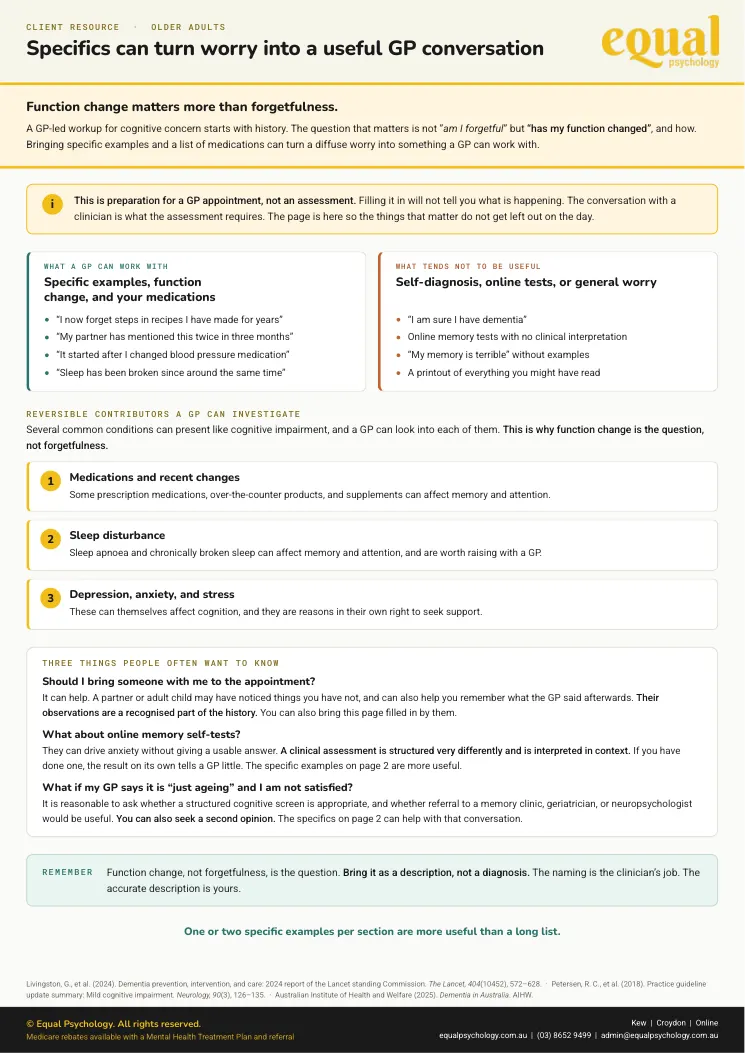
Page 1, read first.What a GP can work with, what tends not to be useful, and three areas a GP can look into that can affect memory and attention:
Medications and recent changes
Including over-the-counter products and supplements
Sleep disturbance
Including chronically broken sleep
Depression, anxiety, and stress
Reasons in their own right to seek support
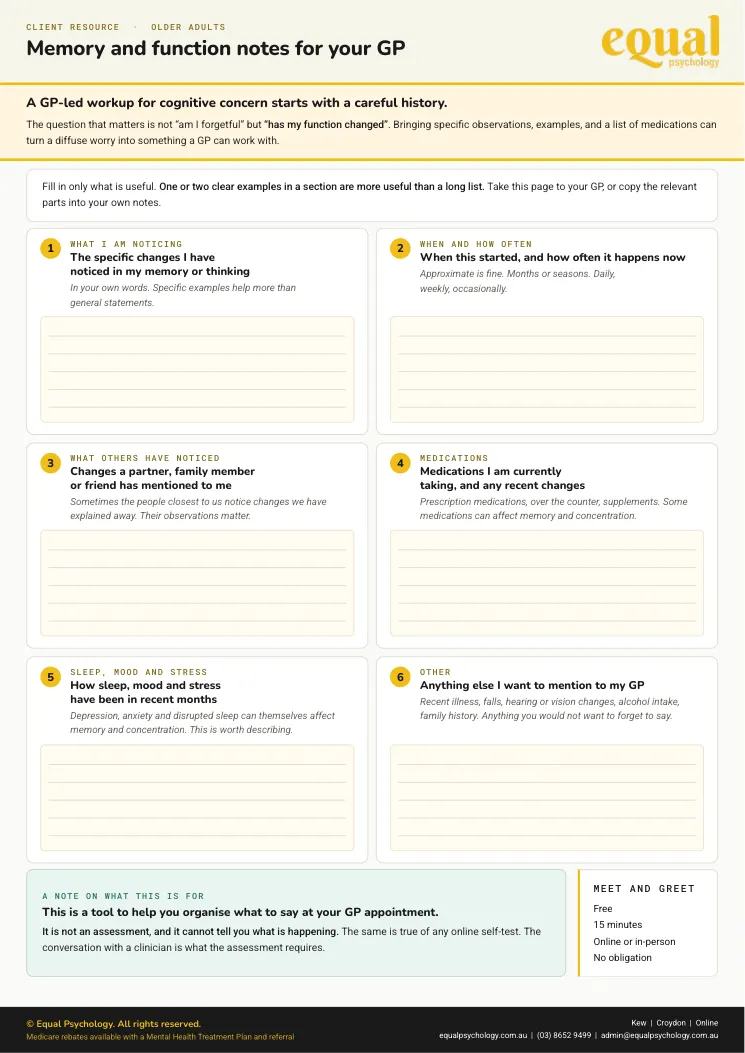
Page 2.Six sections, each with a guiding line: what I am noticing, when and how often, what others have noticed, medications, sleep, mood and stress, and other things you would not want to forget to say.
Page 1 · Read firstPage 2 · To fill in
How to use it
1Use specific examplesFill in only what is useful. One or two clear examples in a section are more useful than a long list.
2Ask someone closeA partner, family member or friend may have noticed changes you have explained away. Their observations can go on the page, or they can fill it in with you.
3Take it to your GPBring the page to your appointment, or copy the relevant parts into your own notes.
Describe what you have noticed: the naming is the clinician's job. Approximate timing is fine. You can type into the PDF on a computer, or print it and write by hand.
One email a month from Equal Psychology with our newest posts, guides and worksheets.
References
Livingston, G., et al. (2024). Dementia prevention, intervention, and care: 2024 report of the Lancet standing Commission. The Lancet, 404(10452), 572-628.
Petersen, R. C., et al. (2018). Practice guideline update summary: Mild cognitive impairment. Neurology, 90(3), 126-135.
Australian Institute of Health and Welfare. (2025). Dementia in Australia. AIHW.
General information only. This worksheet is general psychoeducation, not a clinical assessment, diagnosis, or treatment. Reading it does not establish a treating relationship. If you would like personalised support, please book a Meet and Greet or speak with your GP. If you are in immediate danger, call 000, or call Lifeline on 13 11 14.