
LatestAnxiety · 6 min read
Worry time: Giving worry a place to live
Worry is often a coping strategy, not a flaw. The peer-reviewed evidence on worry time, a structured technique for working with anxiety, explained.
 Matthew Hallam28 Jan 2026
Longer reads from our psychologists, written for the reader who is genuinely working something out.
Worry is often a coping strategy, not a flaw. The peer-reviewed evidence on worry time, a structured technique for working with anxiety, explained.
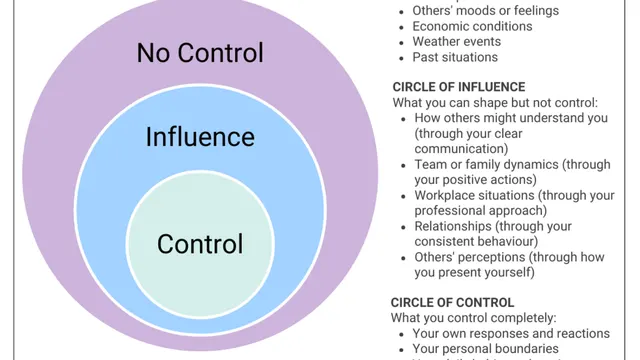
Matthew Hallam28 Jan 2026Sorting attention into what you can control, what you can influence, and what sits outside both. A clinical adaptation of the perceived-control evidence.
Matthew Hallam27 Nov 2025Self-help culture says anxiety and intuition feel different and the work is to tell them apart. The research is more honest. A psychologist on what is actually happening in the body, and a more useful question to ask.
Matthew Hallam13 May 2025Not every protective pattern is a problem. Some are still doing their job; some have become the thing in the way. A psychologist on how to tell the difference, with four diagnostic questions you can hold a pattern up against.
Matthew Hallam7 May 2025When someone we love is anxious, the instinct is to fix it. The research suggests the opposite. You cannot make them feel safe in their own nervous system. A psychologist on accommodation, the SPACE framework, and a four-step way to support without rescuing.
Matthew Hallam22 Apr 2025Anxiety patterns are not just habits. They are protective predictions held in long-term threat memory. They do not weaken from understanding alone. A psychologist on what the system actually needs to update, and a four-step way to work with a persistent pattern.
Matthew Hallam16 Apr 2025The small step is not the warm-up. The small step is the work. A psychologist on the comfort zone, the brain's safety signal, and a four-step way to grow your edge gently.
Matthew Hallam8 Apr 2025One email a month from Equal Psychology with our newest posts, guides and worksheets.
Changes apply to every page and are remembered on this device.





 Anxiety
 Depression & mood
 Trauma
 ADHD in adults
 Sleep
Sleep Burnout & stress
 Chronic health
 Older adults